Baby tooth loss in children
Table of content
The loss of baby teeth is one of the most important stages of a child's development, causing concern for many parents, especially if it's delayed or occurs prematurely. This article explains everything related to baby teeth, from the causes and normal timing to situations requiring medical intervention.
What are baby teeth? And why do they fall out?
Baby teeth are the first set of teeth to appear in children, totaling 20 teeth, and they usually begin to erupt around 6 months of age.
These teeth gradually fall out to make room for permanent teeth. This is a natural and important process for jaw development and proper speech.
When does baby tooth loss naturally begin?
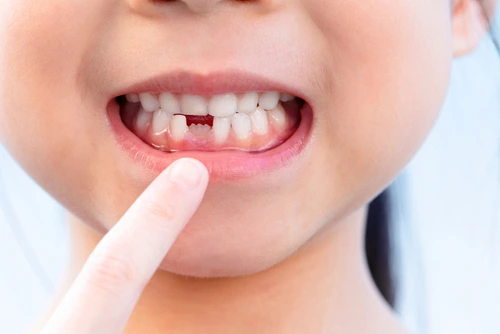
Baby teeth typically begin to fall out between the ages of 5 and 7 and continue until around age 12. The timing varies from child to child depending on:
- Genetic factors
- Oral and dental health
- Nutrition
- Daily dental care
Is baby tooth loss at age four normal?
The loss of baby teeth at age four can be normal in some cases, but it often requires medical attention, especially if accompanied by:
- Severe decay
- Trauma or injuries
- Gum infections
In this case, a dental check-up is recommended for the child to ensure the permanent teeth are developing properly and are not affected.
Book a dental check-up:




Early Baby Tooth Loss: What are the Causes?
Early baby tooth loss can occur due to several factors, including:
- Deep, untreated decay
- Weak tooth enamel
- Direct injury to the mouth
- Malnutrition and calcium deficiency
- Poor oral hygiene
Early loss can lead to:
- Crowding of permanent teeth
- Speech problems
- Jaw deformities
Causes of Delayed Baby Tooth Loss
Causes of delayed baby tooth loss include:
- Absence of a permanent tooth beneath the baby tooth
- Delayed eruption of permanent teeth
- Thick roots of baby teeth
- Hormonal or genetic problems
In these cases, the child may need to have the baby teeth medically extracted to avoid future problems.
Safe Baby Tooth Extraction for Children
When Domestic Molars Fall Out in Children
Many parents wonder when molars fall out in children. The answer is:
- First Baby Tooth: 9 to 11 years
- Second Baby Tooth: 10 to 12 years
Permanent molars don't fall out like baby teeth, so maintaining the health of baby molars is very important for the proper growth of permanent teeth.
Does a child need preventative treatment during the teething period?
Yes, the teething period is one of the most important times when a child needs protection against cavities, as new teeth are more susceptible to wear and tear.
One of the best preventative solutions is:
- Children's Fluoride for Cavity Protection
- Fluoride helps to:
- Strengthen tooth enamel
- Reduce the risk of cavities
- Protect new permanent teeth
Book your children's fluoride treatment – early prevention for healthy teeth
When should you visit the dentist?
A visit to the dentist is recommended in the following cases:
- Delayed or accelerated loss of baby teeth
- Pain or swelling in the gums
- Significant decay
- Tooth loss due to trauma
- Irregular eruption of new teeth
Early examination helps avoid future complications and saves the child from complex treatments later on.
Conclusion:
The loss of baby teeth is a natural stage, but it requires monitoring and awareness from parents.
Taking care of your child's dental health, regular checkups with the dentist, and choosing appropriate preventive and therapeutic packages will ensure your child has a healthy smile and a better future for their permanent teeth.